
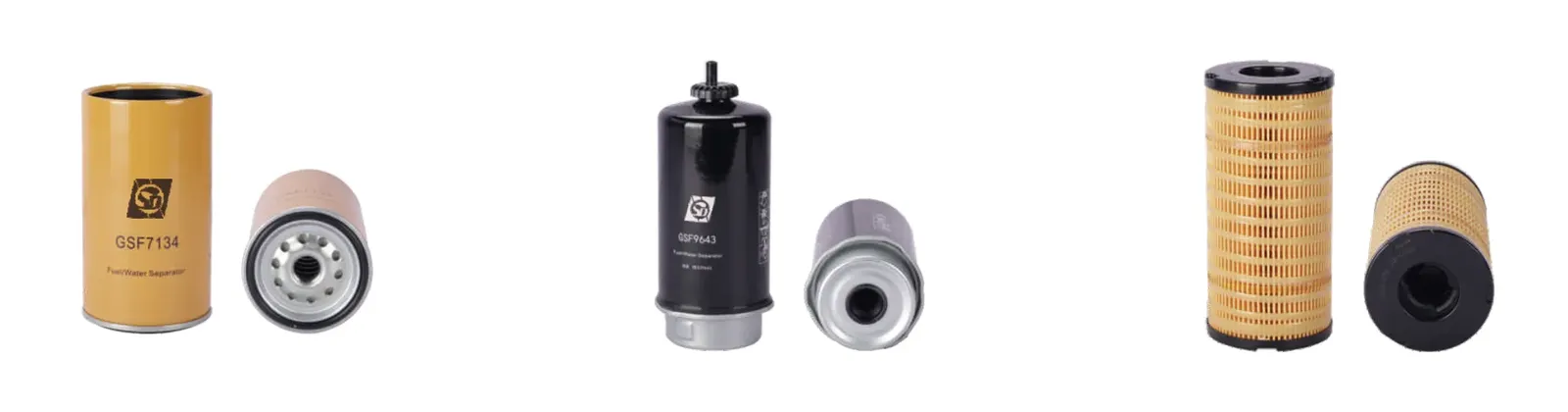
How a fuel water separator works
Water is one of the main threats to a diesel fuel system. A fuel water separator removes it before it reaches the injection pump and injectors.
Why water in diesel matters
Water reduces lubrication in the injection pump and injectors, causes corrosion and supports microbial growth in the tank. High-pressure common rail systems are the least tolerant of it.
How the separator removes water
Fine water droplets pass into a coalescing media layer, where they merge into larger drops. Water is denser than diesel, so the larger drops fall out of the fuel flow into a bowl or sump at the bottom. Some designs add a water-repellent screen that stops remaining droplets passing through.
Free water separates well. Water held in an emulsion is harder to remove, and some fuel additives and biodiesel blends reduce separation performance. ISO 4020 sets out test methods for diesel fuel filters, including water separation.
Primary and secondary fuel filters
Many machines run two stages. The primary filter, usually on the suction side, does the water separation and coarser filtration. The secondary filter, on the pressure side before the injection pump, is the finer stage. The micron rating for each comes from the engine maker.
Draining the water
Water collects in the bowl until it is drained through the valve at the bottom. Drain at the interval your operator's manual sets, and whenever the water-in-fuel sensor warns. Never let the bowl fill to the media.
What to check on a replacement
Match the thread, the bowl connection, the drain valve and the sensor port, as well as height and diameter. Some separator spin-ons reuse the old bowl, so the bottom thread must fit too.
Related products
Our spin-on fuel filters and water separators list thread and dimensions for each part number.
The full fuel filter range also includes primary and secondary elements.
Buying for a fleet? Send your part numbers for a quotation.