
Hydraulic filter micron rating and beta ratio explained
A micron number on its own does not tell you how clean a filter keeps your hydraulic oil. The beta ratio does. This guide shows how to read both.
What a micron rating tells you
One micron (µm) is one thousandth of a millimetre. A hydraulic filter micron rating names a particle size, for example 10 µm, but not how many particles of that size the filter stops. Two filters both sold as "10 micron" can perform very differently.
Nominal and absolute ratings
A nominal rating is the maker's own statement, with no fixed test behind it. It often means only part of the particles at that size are captured.
An absolute or beta-rated figure comes from a standard multi-pass test, so you can compare filters from different makers on the same basis.
The beta ratio (ISO 16889)
ISO 16889 is the multi-pass test for hydraulic filter elements. Particle counters, calibrated to ISO 11171, count particles at or above size x upstream and downstream of the filter. The beta ratio is upstream count divided by downstream count, written βx(c). The (c) shows the ISO 11171 calibration.
Capture efficiency follows directly: efficiency = (1 − 1/β) × 100%.
| Beta ratio | Capture efficiency at that particle size |
|---|---|
| 2 | 50% |
| 10 | 90% |
| 75 | 98.7% |
| 200 | 99.5% |
| 1000 | 99.9% |
Reading a spec line
"β10(c) ≥ 200" means that in the test at least 99.5% of particles 10 µm and larger were retained. Compare filters only at the same particle size and under the same standard. Figures from the withdrawn ISO 4572 test are not directly comparable with ISO 16889 figures.
What the rating leaves out
The beta ratio does not tell you dirt-holding capacity, pressure drop at your flow, or how the element behaves in cold starts and flow surges. Ask for the full test report when those matter. Pressure drop and collapse strength are covered in our guide to filter collapse pressure.
Choosing a rating
Start from the machine maker's filter specification and the cleanliness target for the system, usually given as an ISO 4406 code. A finer rating than specified is not automatically better: it loads faster, raises pressure drop and can push the bypass valve open more often.
Related products
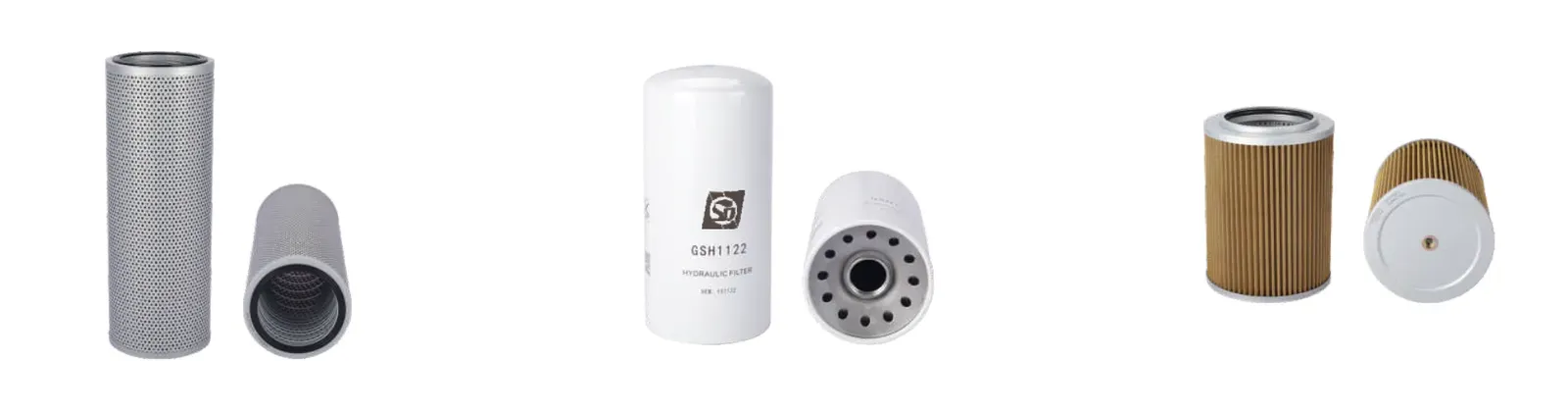
Our hydraulic range covers spin-on cans and replacement elements for excavators, loaders and other heavy equipment.
Replacing a filter you already run? Search by the old filter's height, diameter and thread.
Need a specific rating? Send us the part number and the rating your machine calls for and we confirm what we can supply.